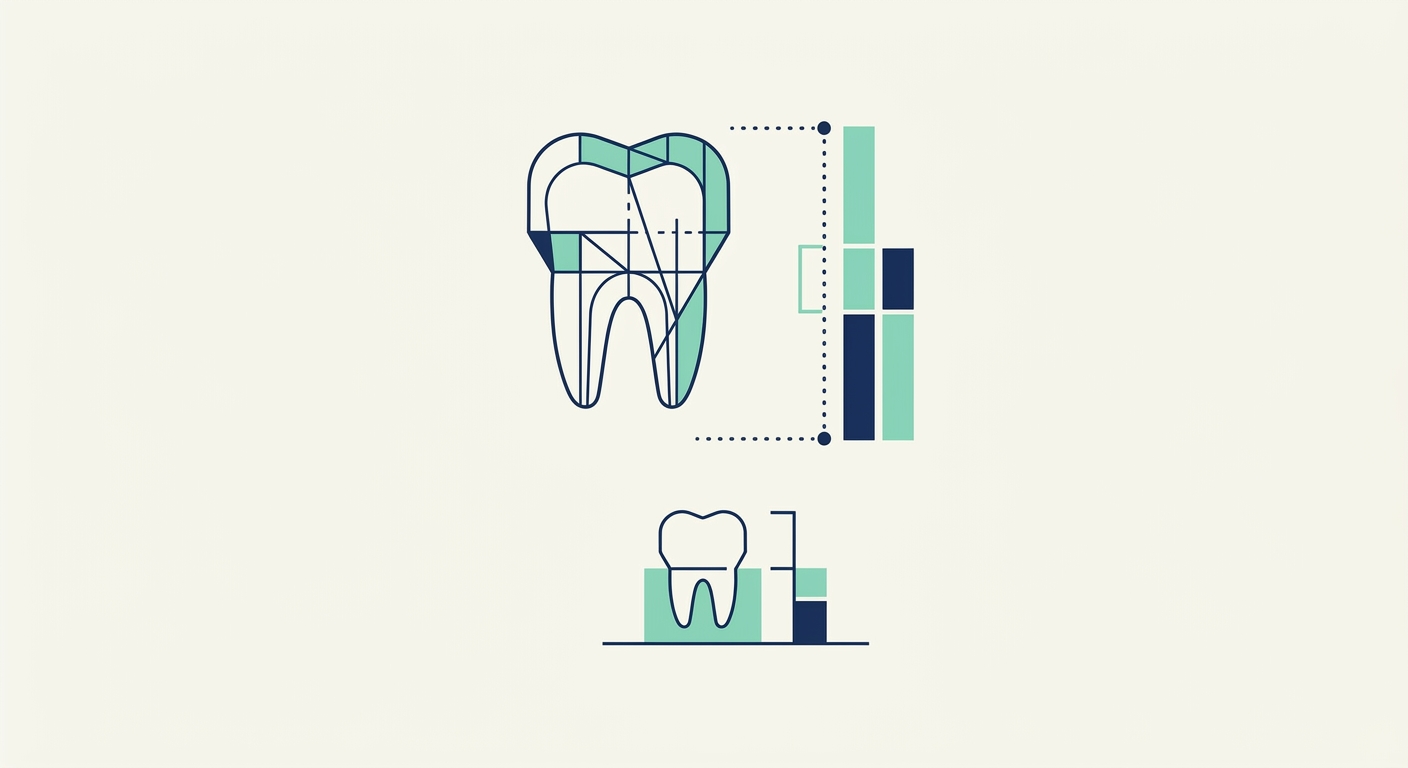
Taiwan spends half the OECD average per head on dental care
A fifteen-year comparison shows that Taiwanese spending on dental care per head rose from 145 to 198 PPP dollars, while the OECD average went from 289 to 412 — and the fee for molar endodontics amounts to 35 to 37% of the Japanese and German one.
A global budget keeps costs down — the question is at whose expense
Taiwan's global-budget health insurance system achieves a low cost of dental care and high accessibility. An analysis published in BMJ Open compared its dental branch with 38 OECD countries over the period from 2010 to 2025, using OECD Health Statistics data and reports from the Taiwanese ministry, adjusted for purchasing power parity and inflation.
The difference in the level of investment is large. Taiwan spent between 0.52 and 0.68% of GDP on dental care, while the OECD average ranged between 0.89 and 1.08%. Per head, Taiwanese spending rose from 145 to 198 PPP dollars, and the OECD average from 289 to 412. Fees for complex procedures differ more sharply still: for molar endodontics the Taiwanese system pays 35 to 37% of what the Japanese and German systems pay.
An interrupted time series analysis showed a sharp drop in the number of dental claims immediately after the start of the pandemic, in the second quarter of 2020 (p < 0.001). Panel regression confirmed what clinicians in fixed-budget systems suspect: there is an inverse relationship between service volume and the value of the individual fee, with an elasticity coefficient of -0.76 (95% CI -0.91 to -0.61; p < 0.001) — more work done means a lower point value. The share of preventive procedures did rise, from 18.3% to 26.7%, but more slowly than in comparable OECD countries (slope difference -1.2 percentage points per year; p = 0.003). The author warns that the low cost of the system probably rests in part on an implicit subsidy from the labour of dentists themselves.
Limitations
This is an analysis of aggregated national data, not of data on treatment outcomes; the effects of the transition to a super-aged society are described by the author only descriptively (the geriatric share of the budget was 8.2% in 2024 and 11.5% in 2025) because a formal analysis lacks at least three years of data after that change.
For your practice
- The relationship between volume and point value is a transferable finding: in a system with a hard budget ceiling, a rise in the number of procedures performed drives down its own price.
- The share of prevention grows more slowly where the ceiling is hard — an argument for negotiating a separate budget line for preventive procedures rather than placing them in the same pot.
- The fact that the public fee for molar endodontics can amount to a third of the fee in comparable countries is a useful reference frame when the valuation of complex procedures is discussed.