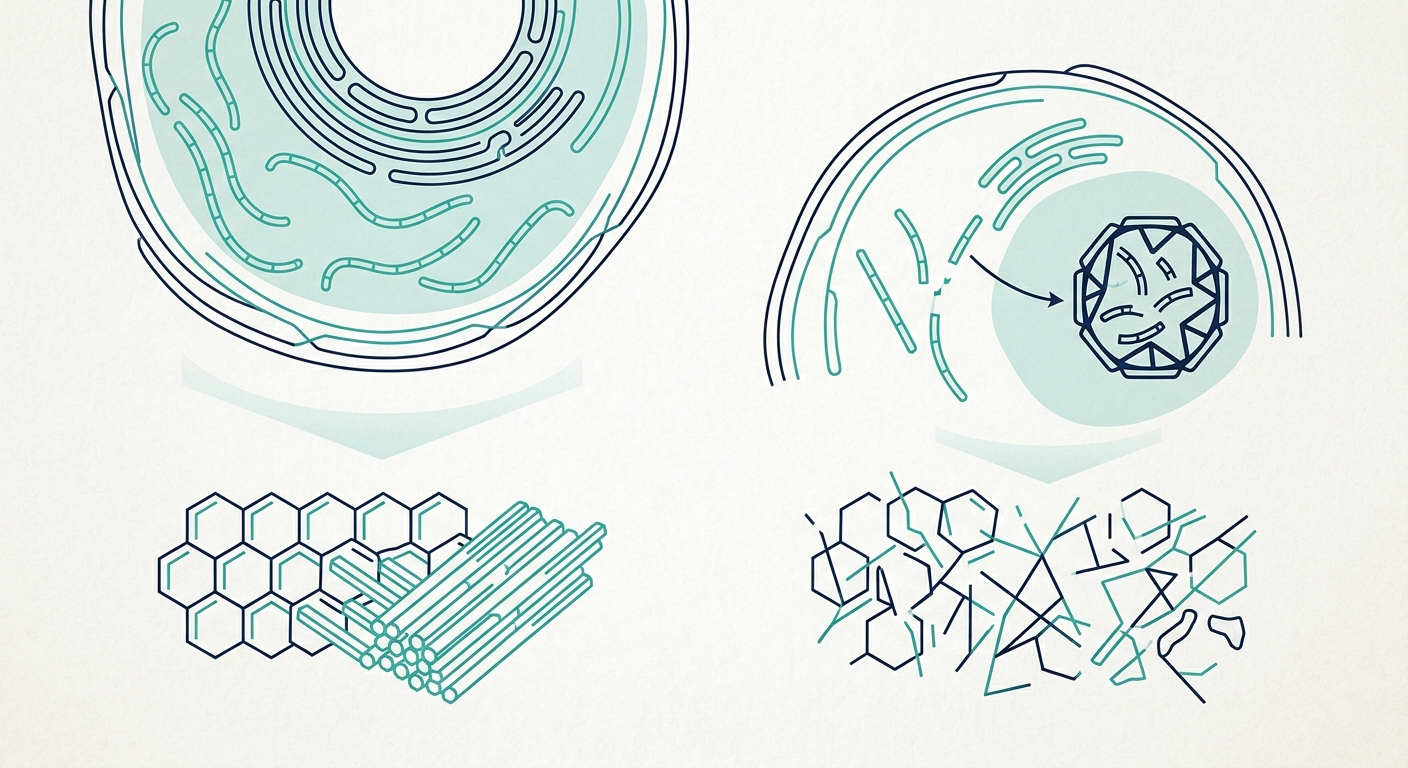
New FAM83H mutation moves the truncated protein into the nucleus and damages enamel
A new nonsense mutation of the FAM83H gene was found in a Chinese family across three generations, and the protein truncated by 573 amino acids is accompanied by disordered enamel with a reduced calcium to phosphorus ratio.
The truncated protein ends up in the nucleus, the enamel stays porous
Autosomal dominant hypocalcified amelogenesis imperfecta arises from mutations that truncate the FAM83H protein, but the mechanism by which this damages enamel has not been clarified so far. The authors carried out a clinical and genetic work-up of a family across three generations, with whole exome sequencing and confirmation by the Sanger method.
A new heterozygous nonsense mutation (c.1819G>T) was found, producing a protein truncated at the C-terminus and missing 573 amino acids. Such a protein does not stay in the cytoplasm but relocates to the nucleus. SEM-EDX analysis of the affected individual's enamel showed a disordered ultrastructure, a reduced calcium to phosphorus ratio and increased porosity.
The functional part was carried out on periodontal ligament cells taken from the patient. In them, enamel matrix proteins (AMELX, AMBN, ENAM) and osteogenic markers (RUNX2, ALP) were reduced at the same time, which points to a dual regulatory role of the FAM83H gene in biomineralisation. The finding fits a model of presecretory pathogenesis: the mislocalised truncated protein impairs mineralisation partly through suppression of the transcription of matrix components.
Limitations
This is a single family; the functional analysis was carried out on periodontal ligament cells and not on ameloblasts, while the structural consequences of the mutation were predicted bioinformatically. The authors explicitly describe their mechanistic insight as preliminary.
For your practice
- In a patient with generalised soft enamel that wears quickly and a positive family history, consider the hypocalcified form of amelogenesis imperfecta and refer the family for genetic counselling.
- Build the restorative plan on the finding from this study: the enamel is more porous and has a reduced calcium to phosphorus ratio, so agree the expected longevity of adhesive solutions with the patient in advance.
- The therapeutic targets the authors discuss are pre-eruptive, so do not promise the patient causal treatment but a long-term restorative plan.