Maxillomandibular advancement lowers AHI by more than 50%, and is rare in Sweden
A review with two case reports in Läkartidningen notes that meta-analyses show a reduction in the apnoea-hypopnoea index of more than 50 percent after maxillomandibular advancement. The procedure is in the guidelines, but is performed in Sweden less often than the indications warrant.
A surgical option that exists in the guidelines but not in practice
Obstructive sleep apnoea (OSA) is common and often unrecognised, and carries an increased risk of cardiovascular, metabolic and neurocognitive complications. The first line of treatment is CPAP, and the option within the dentist's reach is a mandibular advancement splint. The problem arises in patients who do not tolerate the therapy or do not respond to it sufficiently.
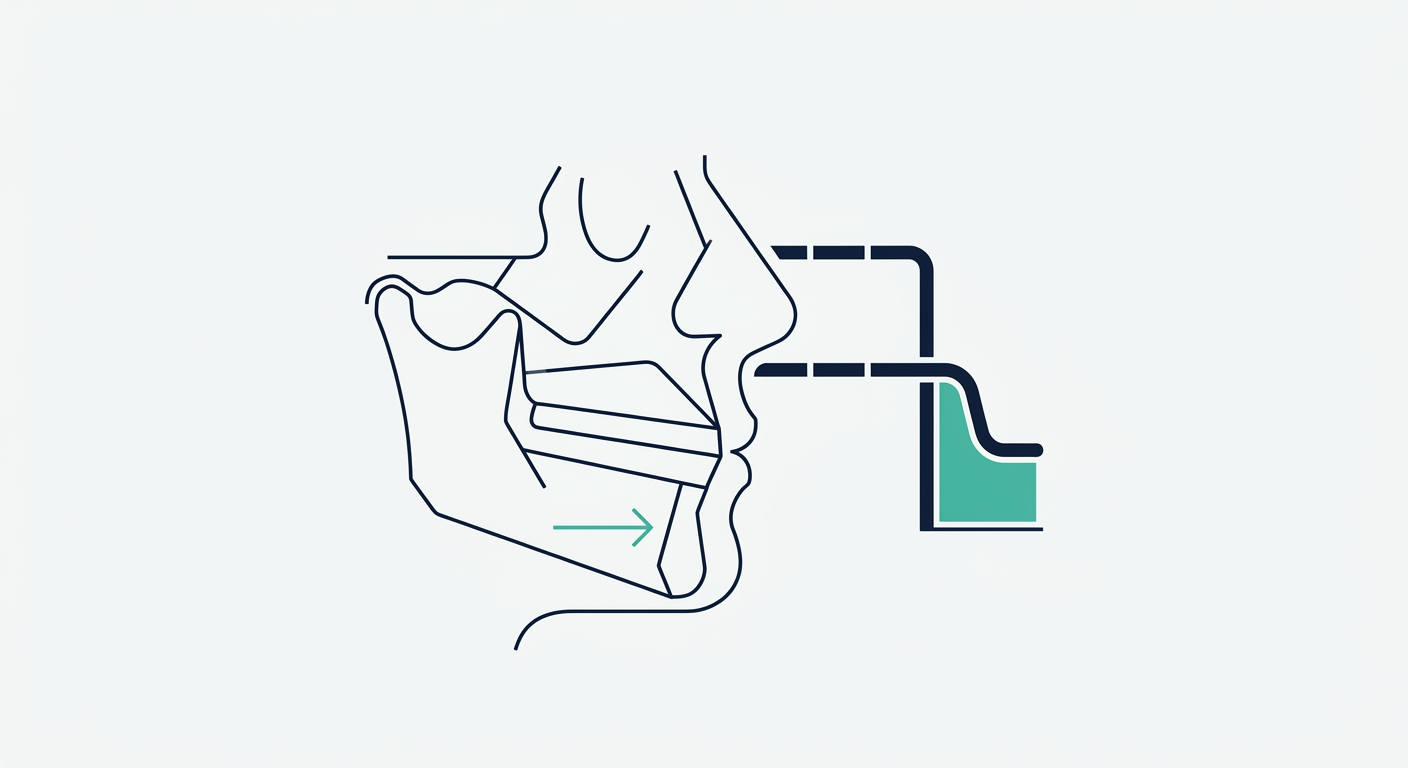
For this group there is a surgical alternative: maxillomandibular advancement (MMA), a procedure in which both jaws are moved forward, thereby increasing the volume of the upper airway. Malakuti and Farzad, writing in Läkartidningen, note that MMA is not an experimental procedure. Meta-analyses and long-term studies show a reduction in the apnoea-hypopnoea index (AHI) of more than 50 percent, often with normalisation of sleep parameters, better quality of life and high patient satisfaction.
The point of the paper lies not in the evidence but in the gap between the evidence and practice. MMA is recommended in international guidelines and recognised in the Swedish national recommendations, but in Sweden it is performed less often than the indications would warrant. With two case reports the authors illustrate the pathway of such a patient and call for greater awareness of the procedure, national coordination and wider clinical use.
Limitations
This is a review with two case reports, not a new comparative study. The figures on the effect come from earlier meta-analyses, and the organisational part of the conclusions is tied to the Swedish health system and does not transfer directly.
For your practice
- A patient for whom you have made a mandibular advancement splint and whose AHI has not fallen sufficiently is not a treatment failure but a candidate for a maxillofacial consultation.
- When taking a history for snoring and daytime sleepiness, ask about CPAP: intolerance of the device is clinically relevant information, not a failing on the patient's part.
- The skeletal relationship of the jaws that you see on a panoramic radiograph and on CBCT is part of the conversation about the airway — a referral to maxillofacial surgery is a legitimate outcome of a dental examination.