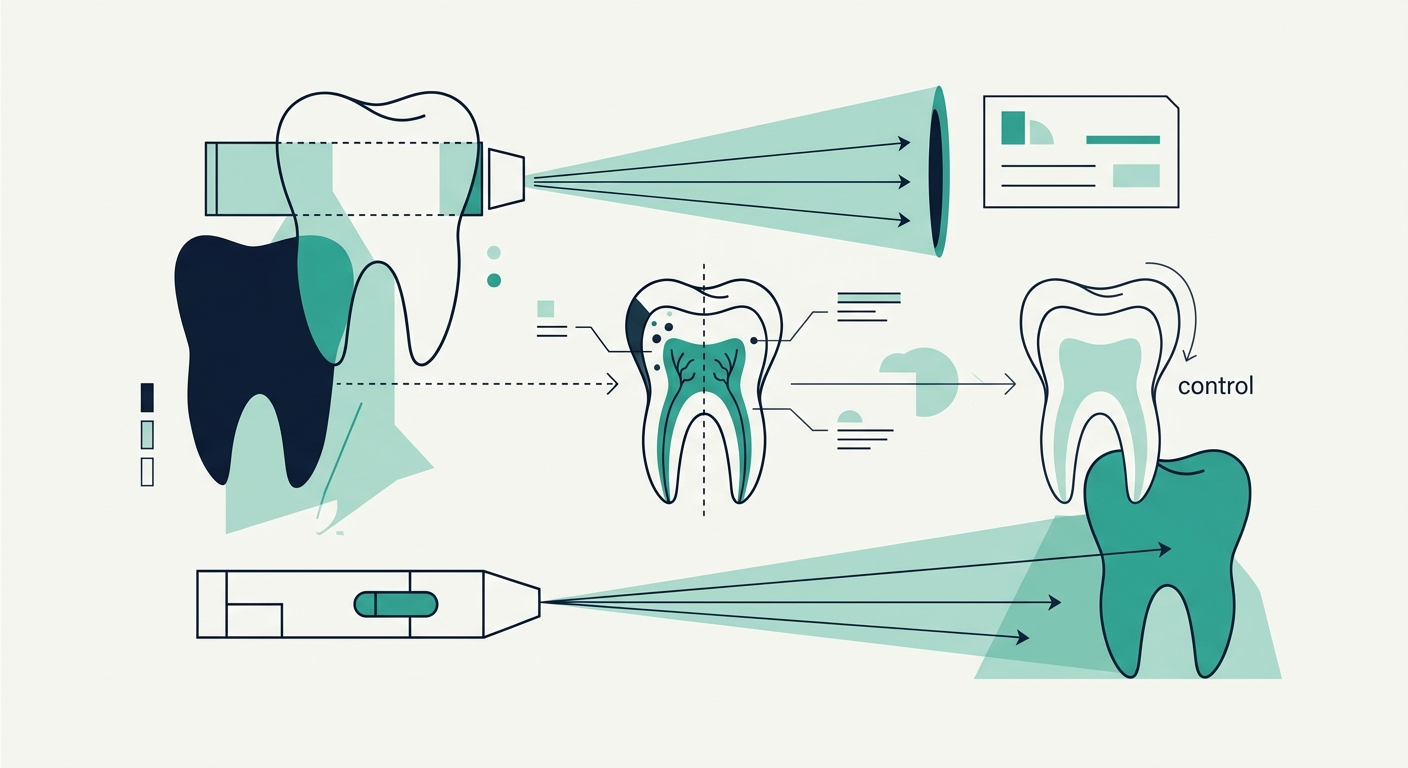
Low-level laser returned pulpal inflammation in diabetic rats to control levels
In an experiment on 48 rats, diabetes intensified pulpal inflammation and reduced the number of blood vessels during orthodontic tooth movement, and irradiation with a 780 nm laser (35 J/cm²) returned those findings to the level of the control group — except for increased collagenisation.
What happens to the pulp when a tooth is moved in hyperglycaemia
Orthodontic force alters both the periodontal ligament and the pulp, and in diabetes that reaction is amplified because the microcirculation is already impaired. Maia's team set up an experiment that separates the two: 48 Wistar rats were divided into a control and a diabetic group — diabetes was induced with alloxan — and some of the animals additionally received low-level laser therapy.
The tooth was moved for 13 days. A laser with a wavelength of 780 nm and a dose of 35 J/cm² was applied every 48 hours over seven days. On days 7 and 13, inflammation, stromal cell density, number of blood vessels, thickness of the odontoblastic layer and collagen deposition were assessed histologically.
On day 7 the difference was clear: the diabetic animals had more pronounced inflammation (p < 0.01), fewer blood vessels (p < 0.001) and a lower proportion of cells (p < 0.01) than the controls. The diabetic group that was also irradiated had inflammatory, vascular and cellular findings comparable to the control group — the laser cancelled out those changes.
One finding did not return to baseline. Increased collagen deposition persisted in the laser-treated diabetic group on both day 7 (p < 0.05) and day 13 (p < 0.001). The fibrous component, then, did not recede even with therapy.
Limitations
The experiment was conducted on rats with chemically induced diabetes, and the outcomes are exclusively histological — there are no data on vitality, pain or the long-term fate of the tooth. Follow-up lasted 13 days and only one laser protocol was tested.
For your practice
- The finding is preclinical: nothing in this study justifies introducing laser therapy into an orthodontic protocol in patients.
- What does transfer is the expectation that in hyperglycaemia the pulp reacts more strongly to orthodontic force — in patients with diabetes it is worth documenting vitality before treatment begins and monitoring it during treatment.
- Increased collagenisation did not recede in the experiment even with the laser, a reminder that not all changes in the pulp after tooth movement are as transient as the inflammatory ones.