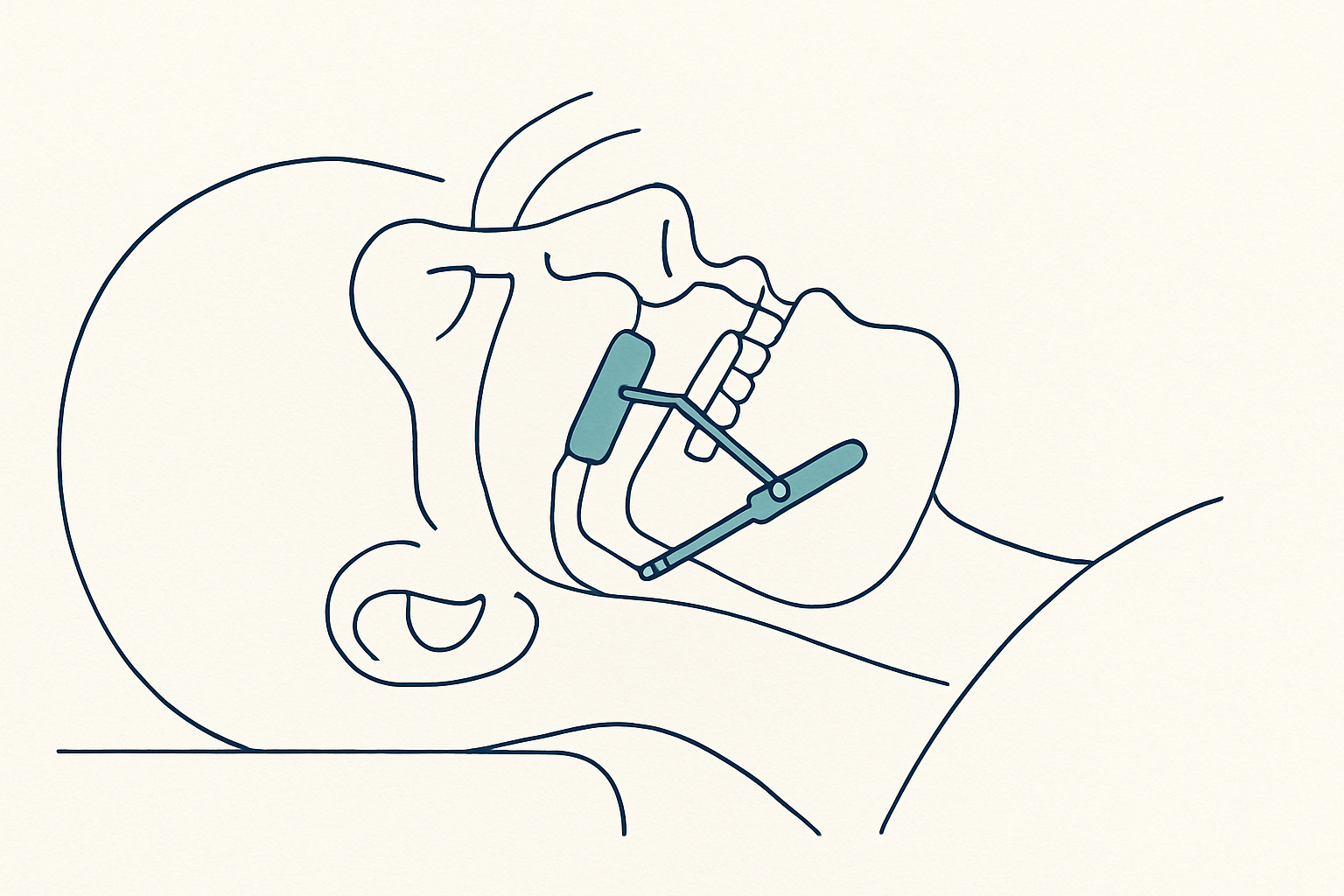
Herbst appliance lowered AHI and ODI, twin block had no effect on supine apnoea
In a randomised trial of 46 patients with mandibular retrognathia and sleep apnoea, the Herbst appliance significantly improved AHI (p = 0.031) and ODI (p = 0.013), while with the twin block the change in supine AHI was not significant (p = 0.531).
Herbst shifted the breathing parameters, twin block largely did not
Functional orthodontic appliances have been prescribed for decades because of the skeletal position of the mandible, and their effect on sleep breathing is usually mentioned as a welcome side effect. A randomised clinical trial by the team around Gokce made that question the primary endpoint.
Forty-six patients with mandibular retrognathia and confirmed obstructive sleep apnoea were included and randomised to a twin block group and a Herbst appliance group. Polygraphy at baseline and after a mean of eight months measured the apnoea-hypopnoea index (AHI), supine AHI, the oxygen desaturation index (ODI) and the lowest saturation, alongside the Pittsburgh Sleep Quality Index (PSQI).
The difference between the groups was clear. In the Herbst group, AHI (p = 0.031), supine AHI (p = 0.001) and ODI (p = 0.013) improved significantly. In the twin block group the change in supine AHI did not reach statistical significance (p = 0.531). The lowest oxygen saturation did not change in either group. Skeletally, both groups progressed — SNB, ANB and Wits values were significantly better after treatment than at baseline (p < 0.001) — and subjective sleep quality on the PSQI improved in both groups (p < 0.05). The authors conclude that functional therapy has a place as an adjunctive treatment for sleep apnoea.
Limitations
A sample of 46 patients and a mean follow-up of eight months, with no untreated control group; some of the intervals reported in the abstract do not track the stated p-values, so the figures warrant checking against the full text.
For your practice
- In a patient with mandibular retrognathia and suspected apnoea it makes sense to request polygraphy before, not after, choosing the appliance.
- If sleep breathing is part of the indication, these data favour the Herbst appliance over the twin block.
- Skeletal change is not evidence of better breathing: SNB and ANB improved in both groups, while the polygraphic parameters improved only in the Herbst group.