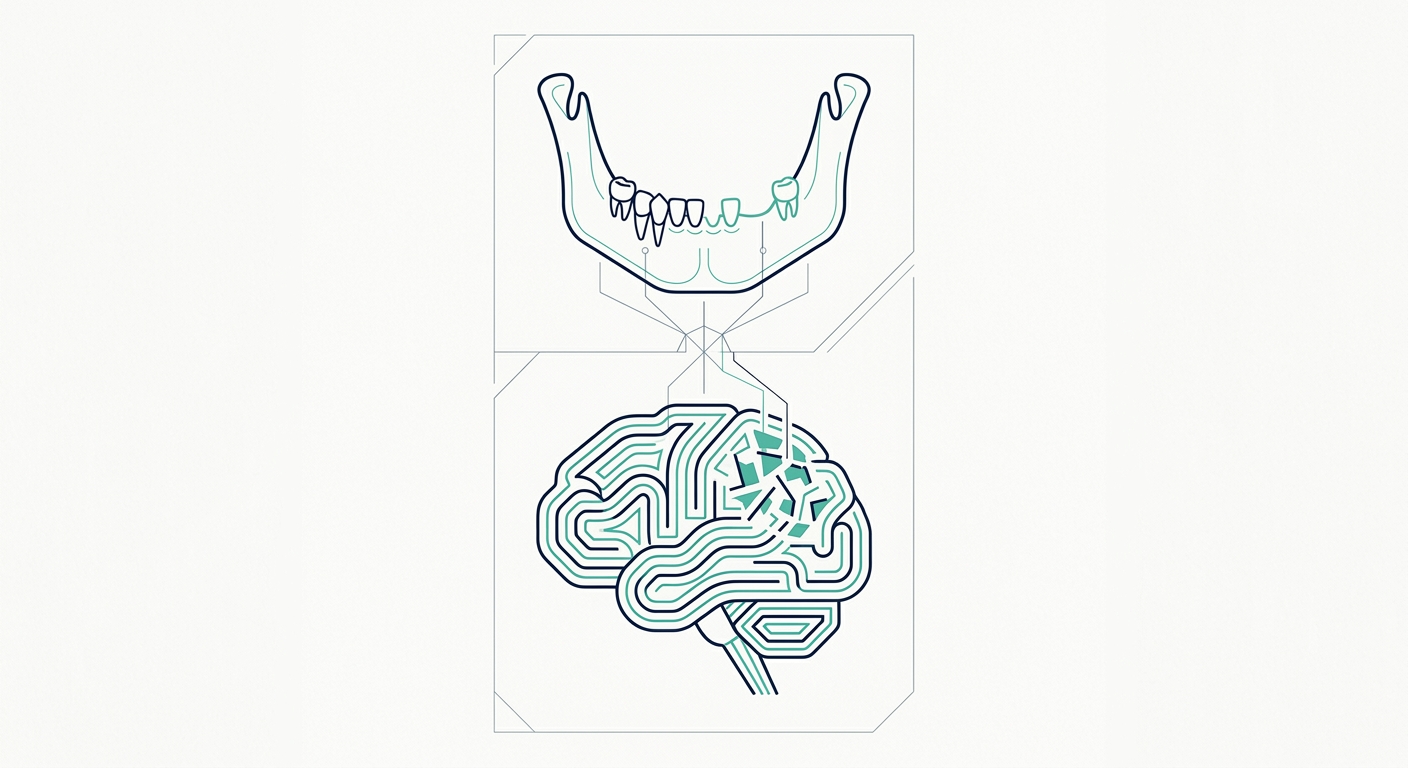
Edentulism linked to a 49 per cent higher risk of cognitive impairment
In a cohort of 4,238 Americans over 50, edentulism carried a hazard ratio of 1.49 for cognitive impairment and 1.28 for dementia, while blood markers of neurodegeneration explained at most 12 per cent of that association.
The association exists, the markers explain only a smaller part of it
The link between tooth loss and cognitive decline has been described several times, but the mechanism remains open. The team around X. Qi tried to shed light on it by measuring blood markers of neurodegeneration in the large American Health and Retirement Study cohort.
A total of 4,238 participants over the age of 50 were included. Edentulism was recorded in 2012, the markers in 2016, and cognitive outcomes were followed until 2022. Neurofilament light chain (NfL), glial fibrillary acidic protein (GFAP), phosphorylated tau-181 and the amyloid beta 42 to 40 ratio were measured.
Edentulous participants had higher values of NfL (beta 4.21) and GFAP (beta 8.06), while no difference was shown for phosphorylated tau-181 and the amyloid ratio. Edentulism predicted cognitive impairment with a hazard ratio of 1.49 and dementia with a ratio of 1.28. Mediation analysis showed that GFAP explains 9.8 per cent of the association with cognitive impairment and 12.0 per cent of the association with dementia, and NfL 9.8 per cent of the association with dementia, but not with cognitive impairment. In other words, the markers measured carry only a smaller part of this link, while the rest remains unexplained.
Limitations
An observational cohort shows association and not causation, and the authors themselves stress that the finding does not prove a causal effect. Edentulism is also a marker of life circumstances, from diet and smoking to income and access to health care, which themselves act on the cognitive outcome.
For your practice
- The finding is an argument for preserving one's own teeth in older age, but not for a promise that prosthetic rehabilitation preserves cognitive function; the study did not measure that.
- To a patient who has heard about teeth and dementia, say exactly this: the link was measured in 4,238 people, and the explanation is still incomplete.
- In an edentulous patient over the age of 50 it is worth checking dietary intake and the regularity of check-ups, because risk factors rarely occur in isolation.