Case report: oxidised cellulose stabilised a mobile tooth under anaesthesia
A case report describes a woman in her fifties in whom a mobile upper incisor with bleeding from the gingiva was noticed after intubation. Oxidised regenerated cellulose placed between the tooth and the gingiva achieved haemostasis and stabilisation, and was removed on emergence.
A simple manoeuvre on the spot, without improvisation
Dental injury is a recognised complication of airway management under general anaesthesia. What exactly to do when it happens on the table is described less often. The anaesthetic team around A. Samuel described one such case in A&A Practice.
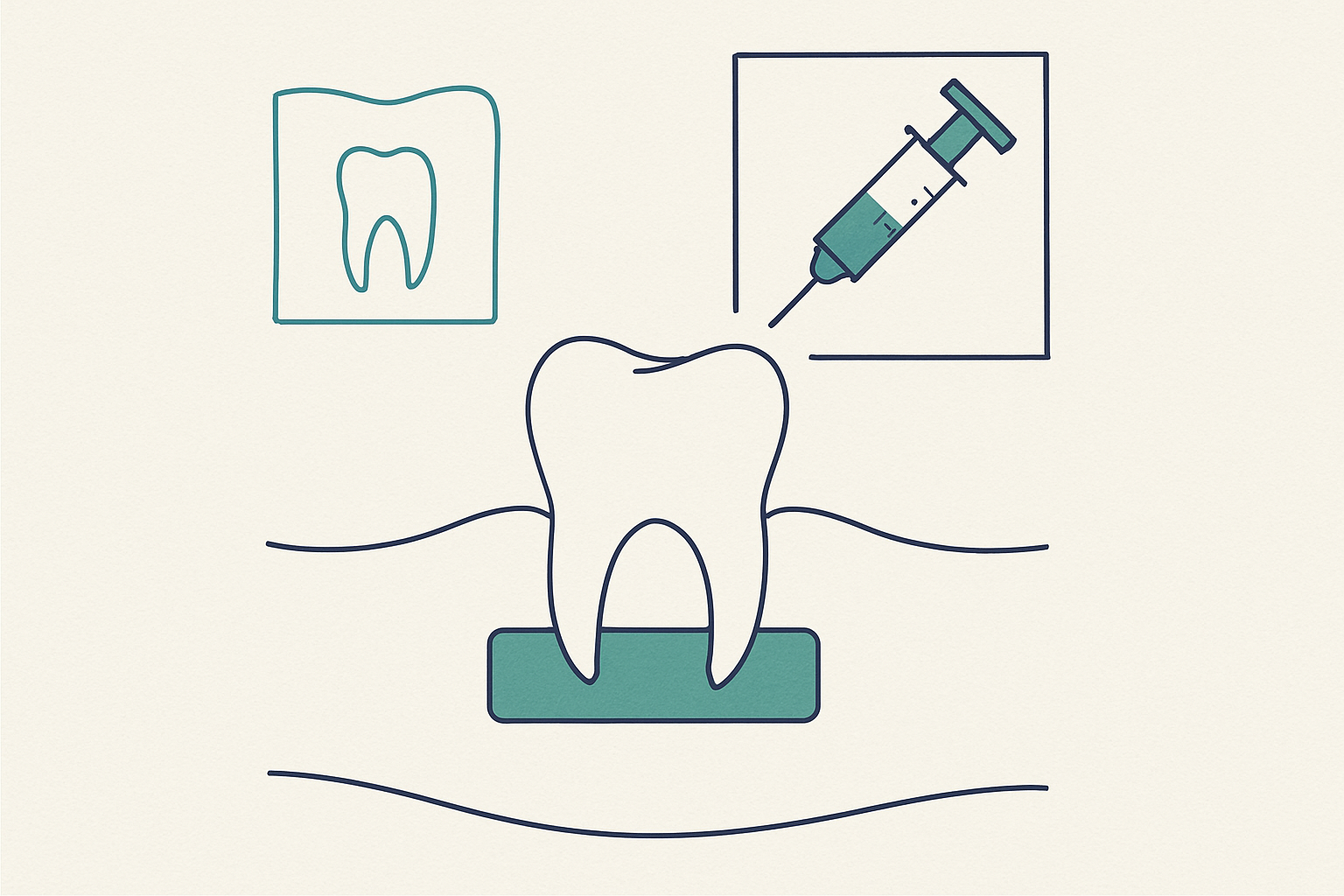
A woman in her fifties was undergoing a planned hysterectomy under general anaesthesia with endotracheal intubation. After the airway was secured, a mobile upper incisor with active bleeding from the gingiva was noticed. Instead of waiting or improvising a fixation, the team placed oxidised regenerated cellulose (Surgicel) between the tooth and the gingiva. That achieved both haemostasis and stabilisation of the tooth for the duration of the procedure.
The second part of the manoeuvre matters just as much: the material was removed on emergence from anaesthesia. The reason is twofold, to check the stability of the tooth directly before the patient leaves the operating theatre, and to avoid material being left unintentionally in the oral cavity. The authors describe the procedure as a simple intraoperative technique for managing unexpected bleeding and mobile teeth under anaesthesia.
Limitations
A single case report is the lowest level of evidence: it shows the procedure was feasible in one patient, but says nothing about how often it succeeds, how it compares with other approaches, or the long-term fate of the tooth.
For the practice
- Before a procedure under general anaesthesia, assess mobile teeth and periodontal status and record the findings; the anaesthetist then knows in advance where the risk is.
- If a patient presents after surgery with a mobile or injured tooth, ask whether anything was placed intraorally and whether it was removed. A retained haemostatic agent is not an impossible finding.
- The case also shows that a mobile tooth with bleeding under anaesthesia does not necessarily call for emergency dental treatment; temporary stabilisation followed by assessment in the practice is the more sensible sequence.