Bioactive glass in glass ionomer: a lower ratio preserves hardness, a higher one lowers it
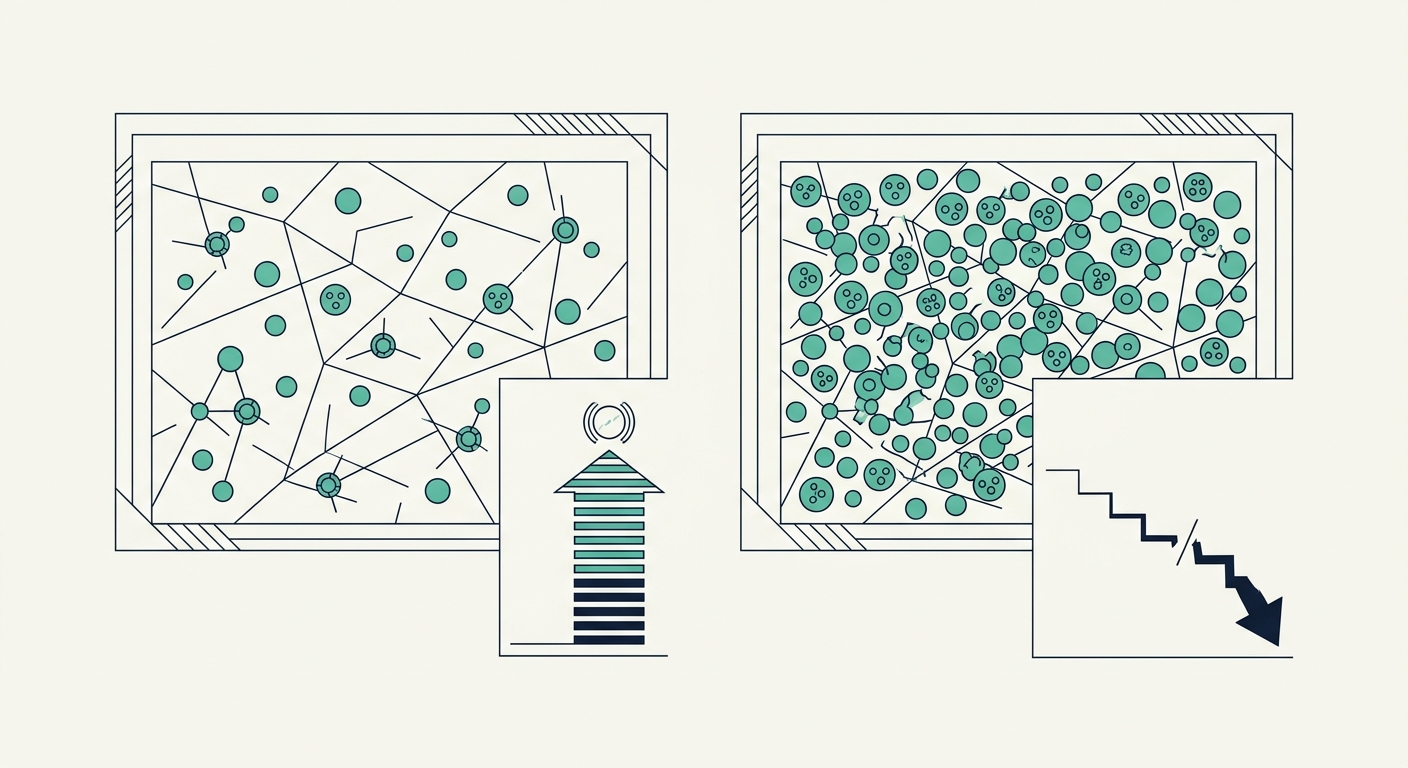
A Croatian in vitro study added 5 weight per cent of bioactive glass to Fuji IX and EQUIA Forte HT: the formulation with the lower fluoride-to-zinc ratio retained its microhardness, while the one with the higher ratio lowered it significantly (p < 0.05).
The lower fluoride-to-zinc ratio retained microhardness, the higher one lowered it
The authors mixed 5 weight per cent of an experimental bioactive glass into two high-viscosity materials — the glass ionomer Fuji IX and the glass hybrid EQUIA Forte HT. Two formulations were tested: BAG1 with a lower and BAG2 with a higher fluoride-to-zinc ratio. Six groups of specimens stored in distilled water were compared, and Vickers microhardness (VHN) was measured after 24 hours and after seven days.
The result separates the two formulations sharply. Unmodified Fuji IX and Fuji IX with BAG1 added had the highest VHN values at both measurements. Adding BAG2 significantly lowered microhardness relative to both original materials (p < 0.05). All groups strengthened over the seven days, and the rise in VHN was statistically significant (p < 0.05) — maturation of the matrix therefore continues beyond the first day.
On specimens stored in phosphate-buffered solution, SEM-EDS analysis found no crystalline precipitates, either on the original or on the modified materials. FTIR confirmed an amorphous silicate structure and the presence of fluoride in both experimental formulations. In other words, the 5 weight per cent addition produced no visible surface deposition under these conditions, while the mechanical cost with BAG2 was clearly measurable.
Limitations
This is in vitro research on specimens in distilled water and phosphate buffer, without masticatory loading, saliva or biofilm; funding information is not stated in the abstract. Follow-up lasted seven days, so the long-term behaviour of the modified cements remains an open question.
For your practice
- Commercial Fuji IX and EQUIA Forte HT remain the reference point for microhardness; nothing in these data justifies improvised addition of filler in the practice.
- If you follow the development of bioactive cements, watch the fluoride-to-zinc ratio: in this series it was precisely the higher ratio that carried the drop in microhardness.
- Check restorations under load after the first week — all the materials tested strengthened further between 24 hours and day seven.