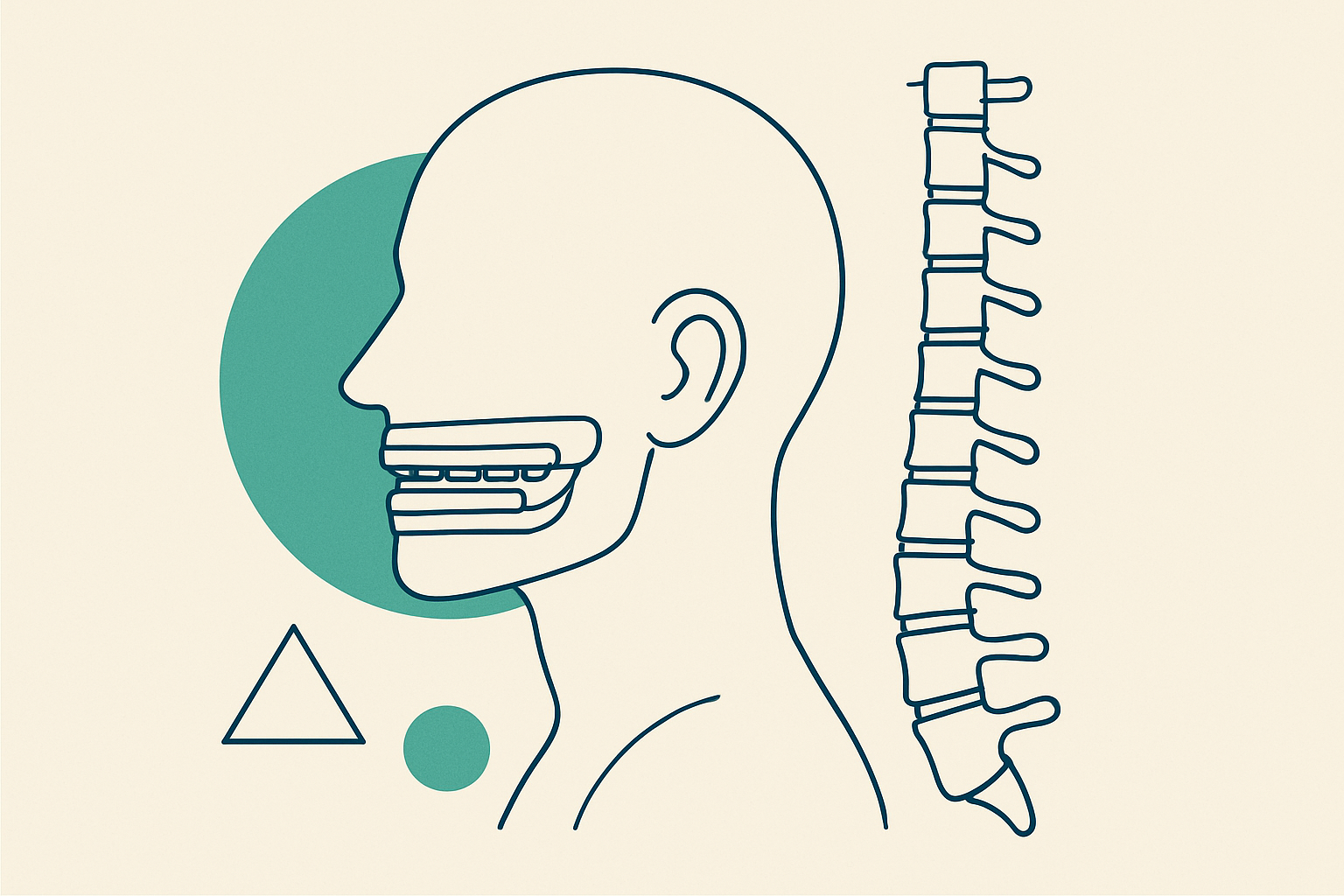
An apnoea appliance in spinal cord injury: 70% still wear it after 6 months
Of 40 people with chronic spinal cord injury and sleep apnoea, 70% wore a mandibular advancement device at least four hours a night after six months. The authors describe that as roughly three times the figure reported for CPAP.
Seven in ten still wear the device after half a year
The group around L. Honzatkova published in Topics in Spinal Cord Injury Rehabilitation a mixed-methods study of how much people with chronic spinal cord injury and obstructive sleep apnoea actually use a mandibular advancement device (MAD). Participants with an apnoea-hypopnoea index of 15 or more per hour received a custom-made device and attended reviews after one week and after one, three and six months; alongside questionnaires, semi-structured interviews were conducted.
Forty participants were enrolled and 35 completed the study. After one month, the adherence criterion, at least four hours a night, was met by 65% (26 of 40), and after six months by 70% (28 of 40). Those who wore the device regularly also had a considerably greater improvement in the apnoea-hypopnoea index than those who did not (19.4 ± 15.7 against 10.7 ± 5.2; p = 0.02).
The interviews brought out the reasons for acceptance: less daytime fatigue, less snoring, and the fact that care was delivered in a familiar rehabilitation setting. Transient side effects, such as discomfort in the teeth or increased salivation, were not a reason to stop. The authors describe the observed level of adherence as roughly three times that reported for CPAP in this population.
Limitations
This is a single cohort without a comparison group on CPAP; the comparison rests on previously published data, and six months is a short period for a conclusion about long-term adherence.
For the practice
- In a patient with neurological impairment and sleep apnoea, an appliance is not a fallback but a realistic option when CPAP does not work out.
- Announce discomfort in the teeth and increased salivation in advance as transient; in this study they did not lead to stopping treatment.
- It pays to organise fabrication and reviews where the patient is already being treated: a familiar setting was among the stated reasons for acceptance.