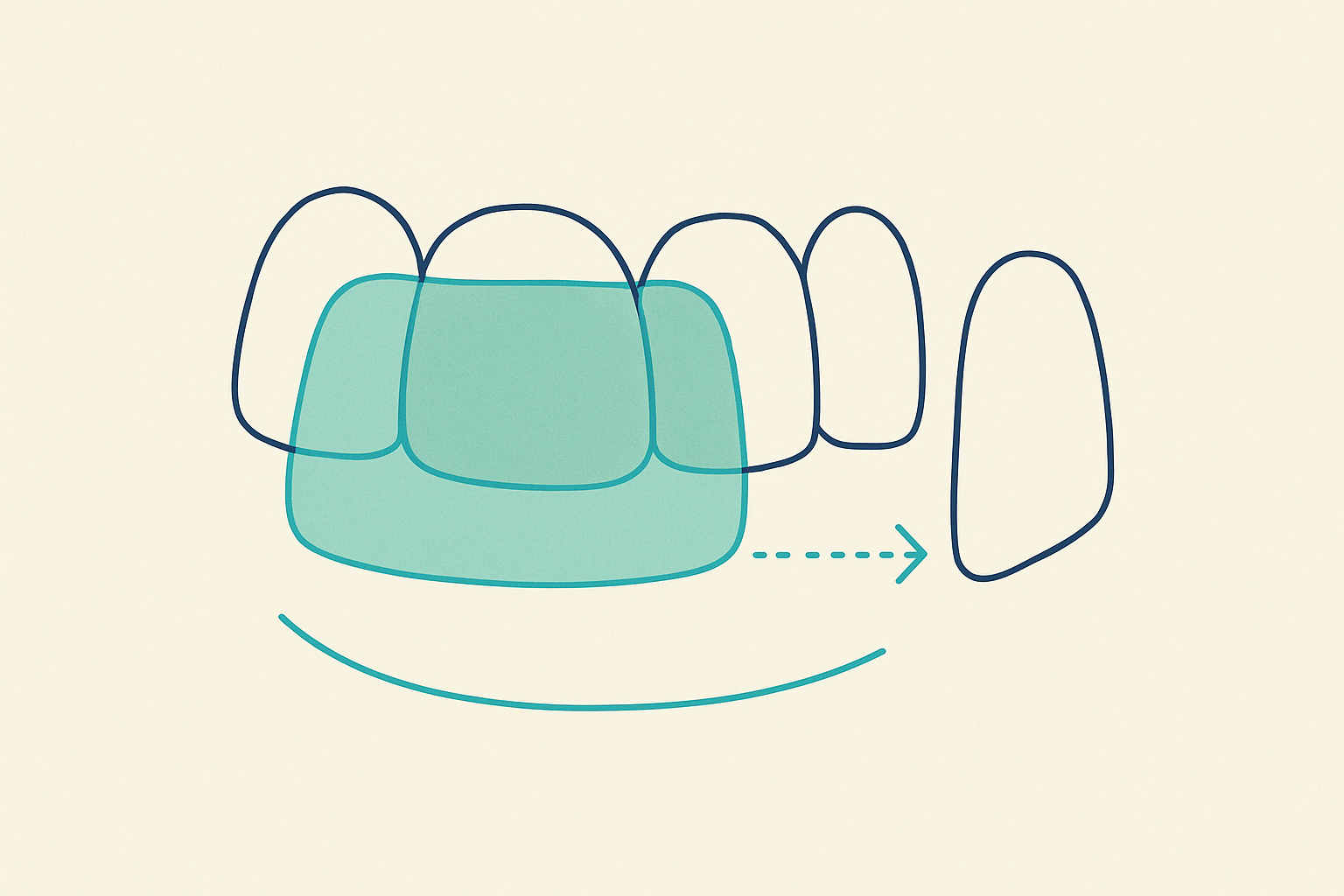
Aligning with aligners before veneers preserves tooth tissue: a case report
M. Pirc and colleagues describe a 33-year-old patient dissatisfied with previous veneers: clear aligner therapy and a digital wax-up preceded minimally invasive preparation and definitive lithium disilicate veneers.
Orthodontics as preparation, not as an alternative to prosthodontics
A patient seeking aesthetic rehabilitation of the upper anterior teeth usually chooses between two offers: prosthetic reconstruction alone, or a combination of orthodontic preparation and prosthodontics. Historically orthodontics lost that argument because of treatment duration and social stigma. M. Pirc and colleagues, writing in The International Journal of Esthetic Dentistry, argue that clear aligners and minimally invasive techniques have removed many of those obstacles, and that aligning the teeth before preparation changes the amount of hard tooth tissue that has to be removed.
The paper presents the case of a 33-year-old patient dissatisfied with veneers made earlier. Treatment began with clear aligners that brought the teeth into a position suited to conservative preparation. A digital wax-up followed and guided the preparation, then definitive lithium disilicate veneers. The authors stress that the digital tools served a double purpose here: as the basis for interdisciplinary planning between orthodontist and prosthodontist, and as a means of communication with the patient.
The choice of material was driven by aesthetics and durability, and the plan was rounded off with a maintenance protocol. The message of the paper is not a new material or a new device but a sequence: when the teeth are aligned first, prosthodontics starts from a more favourable position and less tooth tissue is removed.
Limitations
This is a single case report without a control group. The abstract states neither the measured amount of tissue removed nor the length of follow-up, so the conclusions are clinical experience rather than evidence at the level of a controlled study.
For the practice
- When a patient is unhappy with existing veneers, consider orthodontic preparation before agreeing to prepare the same teeth again.
- Use the digital wax-up as a consent tool as well: a patient who has seen the intended outcome enters preparation with a clear expectation.
- Agree with the orthodontist on the criterion for sufficient alignment before aligner therapy starts; the goal is not ideal occlusion but a position that allows minimal preparation.